
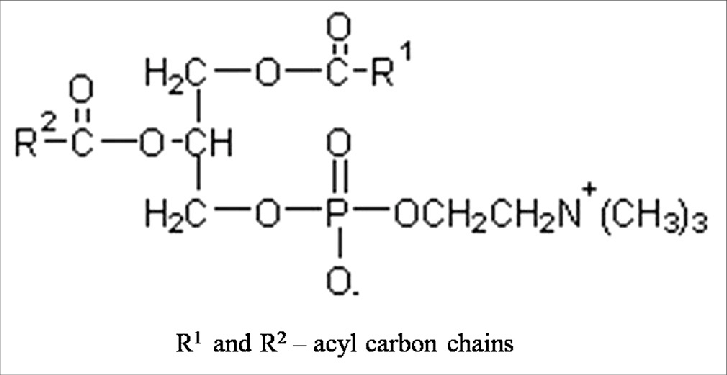
Phosphatidylcholine, also known as PC, is not a vitamin but a type of phospholipid. Phospholipids are crucial components of our cell membranes. They consist of a hydrophilic (water-loving) head and a hydrophobic (water-fearing) tail, making them excellent barriers to prevent the passage of molecules and ions into and out of cells. However, the lipid bilayer also allows selective passage of certain substances essential for cellular health.
Phosphatidylcholine can positively impact the mechanisms involved in the production of acetylcholine, a chemical present throughout the nervous system. Acetylcholine acts as a neurotransmitter, sending messages between nerve cells and playing a crucial role in the function of the nervous system by improving sensory perception.
In Alzheimer’s disease, the cells in the brain responsible for producing acetylcholine are damaged. This damage also affects the way electrical signals move across synapses, which in turn affects the stages of memory function:
- The creation of a memory (encoding)
- The transformation of short-term memories into long-term memories (consolidation)
- The retrieval of a memory (recall)
Of these three stages, acetylcholine has the most significant effect on encoding.
Phosphatidylcholine serves as a reservoir for the choline needed to produce acetylcholine, ensuring it doesn’t go directly to the manufacturer. Instead, it goes directly to maintaining and supporting the cell membrane, allowing the free passage of nutrients and energy into the cell and removing waste and debris.